
Evansville Address History Sources
No single roll identifies all previous residents of an Evansville address. Start with the source closest to the time being studied. XSoft ties the current street address to a parcel and legal description. Recorded deeds and the Auditor transfer book follow ownership. City directories, census schedules, obituaries, and probate records then fill in the household layer. Building permits, Sanborn maps, and property-owner maps explain changes to the site itself.
| Source | Years It Covers | Where Held | What It Shows |
|---|---|---|---|
| Grantor and grantee indexes | 1818-1901 on listed microfilm; later coverage varies | Indiana State Library and Vanderburgh Recorder | Parties and recorded transfers |
| Evansville city directories | Digitized collection begins in 1858 | Evansville Vanderburgh Public Library | Names, addresses, work, and household clues |
| Order books and estate index | Order books 1821-1918; estate index 1821 onward | State Library microfilm and county records | Court and estate events tied to a resident |
| Sanborn maps | Multiple historic Evansville editions | Indiana State Library and Library of Congress | Building footprint, use, and construction clues |
| Permits and inspections | Coverage depends on city files | Evansville Building Commission and MUNIS | Work address, scope, plans, and permit activity |
For a nineteenth-century question, begin with directories and microfilm. For a recent Evansville address, begin with the parcel and current deed, then work back. The official sources do not state a complete online cutoff for every recorder image or assessor history, so an empty web result is not the end of the search.
Build a research log before opening several databases. Give each row a source, search date, name as printed, address as printed, parcel or document number, and a short note about what the record proves. Keep conflicts instead of silently choosing one version. A changed spelling, middle initial, or post-office address may separate two people with the same name. It may also show that a record was indexed from handwriting. Copies from the custodian are the best check when an index entry is too brief.
Trace Evansville Owners Backward
The Vanderburgh Assessor search accepts an owner, address, or property number. Copy the parcel number and full legal description from the detail record. A legal description identifies the land by lot, block, subdivision, or metes and bounds, so it can survive a change in the street number.
- Find the current Evansville parcel and copy its owner, parcel number, legal description, and transfer details.
- Search the current owner's purchase in the Recorder index by party name, recorded date, parcel, subdivision, lot, block, or legal description.
- Read that deed for the seller, then search the seller as a grantee to locate the seller's earlier purchase.
- Repeat the link while names and the land description match. Record document numbers and dates as you go.
- When the online trail stops, use the free public computers in Recorder Room 231 or consult the State Library microfilm.
- Grantor and grantee
- The grantor transfers land; the grantee receives it.
- Chain of title
- The linked series of transfers for one parcel.
- Legal description
- The recorded land description, which is more stable than a mailing address.
The Vanderburgh County Recorder records deeds, mortgages, plats, liens, releases, surveys, and related instruments, but it does not perform a title search or give legal advice. That limit matters. A personal house-history trail is useful evidence, not a formal title opinion.
Evansville Deed Search Channels
Evansville previous residents research has three Recorder routes. Room 231 in the Civic Center offers free public-computer searching during regular business hours. Tapestry serves an occasional remote search for a fee, while Laredo is a subscription service funded through an escrow account. Phone and mail contacts remain useful when the date range or index coverage is unclear.
The Recorder access instructions explain those choices. Tapestry exposes party first and last names, document number and type, recorded-date range, consideration, subdivision, lot, block, parcel number, and legal-description fields. Search wide date ranges with care, since the official research did not establish one complete cutoff for online index images.
See the Tapestry search entry before planning a remote session.
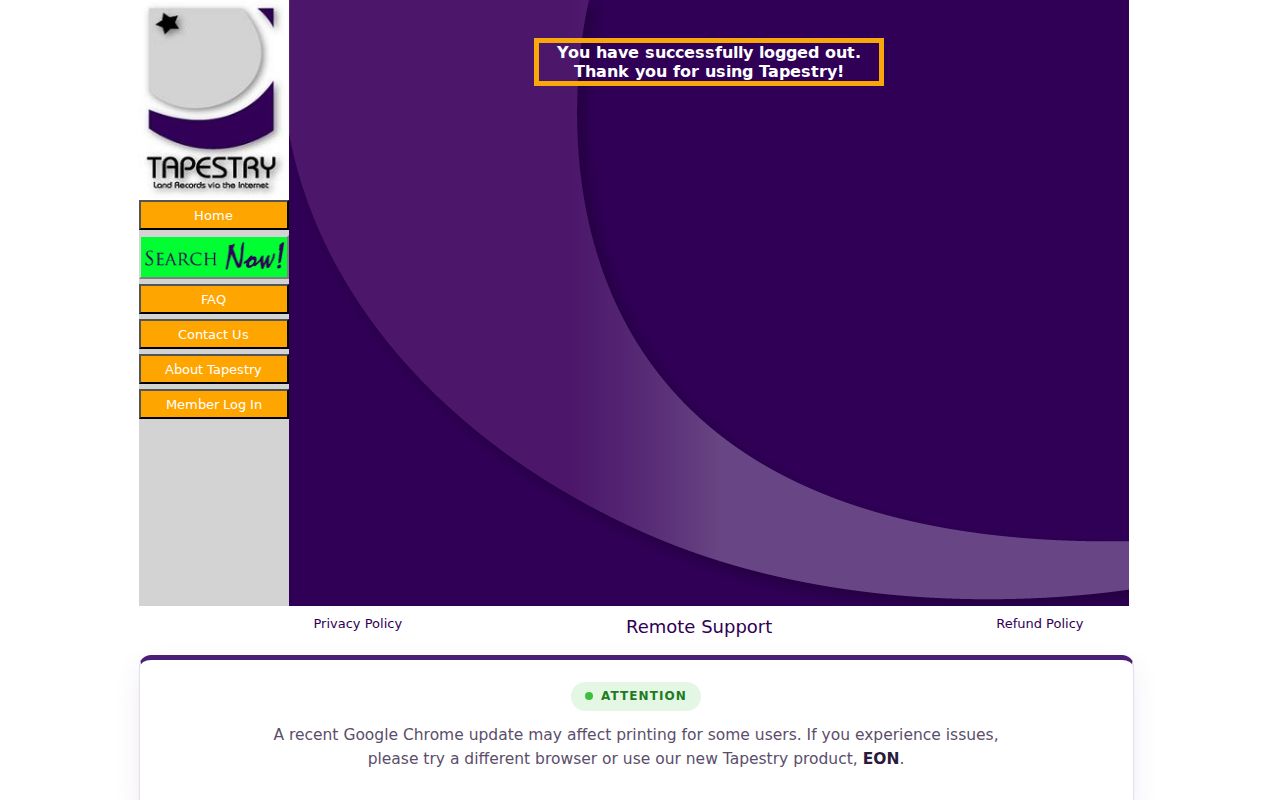
The field set lets a researcher move from a known name to a parcel or recorded instrument, then check the legal description before accepting the match.
Evansville Auditor Transfer Clues
The county Auditor maintains a transfer book arranged by township, city, and town. An entry can include the tax description, conveyance date, parties, grantee post-office address, and endorsement. Those fields can bridge a gap between a parcel roll and the deed index, especially when a name is common or an old mailing line differs from the site address.
The Vanderburgh Auditor transfer page is the official starting point.
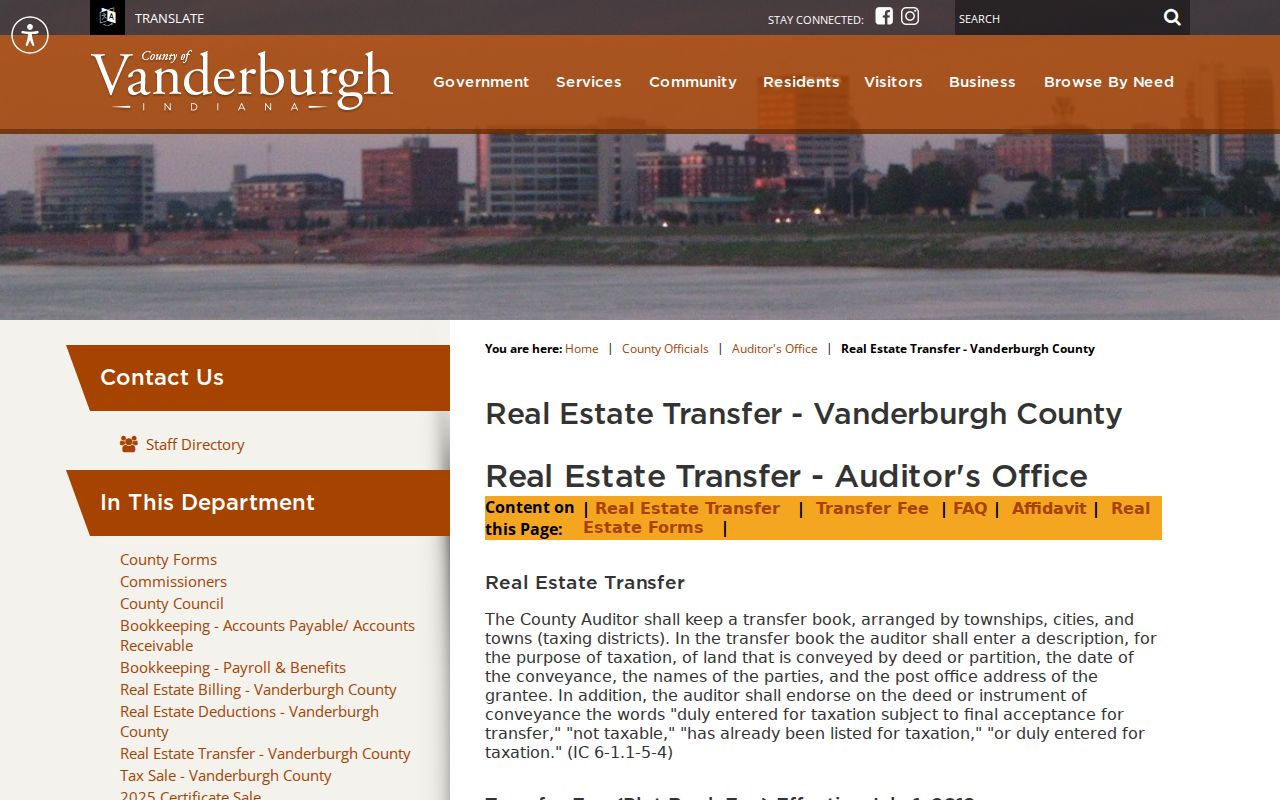
The transfer entry is a cross-check, not proof that the grantee occupied the Evansville property. Compare it with a directory or census before labeling that person a resident.
Tax descriptions can be terse. Compare the transfer book's lot and block with the recorded deed and assessor detail before moving to an older owner. A grantee post-office address is useful because it may distinguish a local buyer from an out-of-town owner. It still describes where mail went at the time of transfer, not where every member of a household lived.
Note: Preserve the parcel number and legal description even when every source seems to agree on the street address.
Evansville's 1929 Number Bridge
Street numbers changed across Evansville's directory history. The 1929 city directory is especially useful because it provides an old-number and new-number bridge. That local feature can rescue a search that appears to lose a household between two directory years. Keep a simple note with the old number, new number, street name, and current parcel description.
Do not force a match based on number alone. Check the neighbors named on each side, the block, the legal description, and the building footprint. The digitized volumes and their search methods are treated in full on the Evansville city directory page. Here, the directory is used only as one link in the backward address trail.
Search the street name with and without a direction such as North, South, East, West, NW, or SE. Printed abbreviations and optical text recognition can hide the right entry. Browse the street section when full-text search fails. The names just before and after the target address often provide a sound block check, especially when the number bridge points to more than one candidate.
Map Evansville Previous Residents
A deed dates ownership, but it may not show when a structure appeared or changed. Evansville Sanborn fire-insurance maps can show a building footprint, material, use, and block context. Property-owner maps and plats help keep the parcel aligned. A city permit can then confirm work at the address through its scope, cost, plans, license-holder details, and inspection path.
The Indiana State Library Sanborn holdings list Evansville map material.
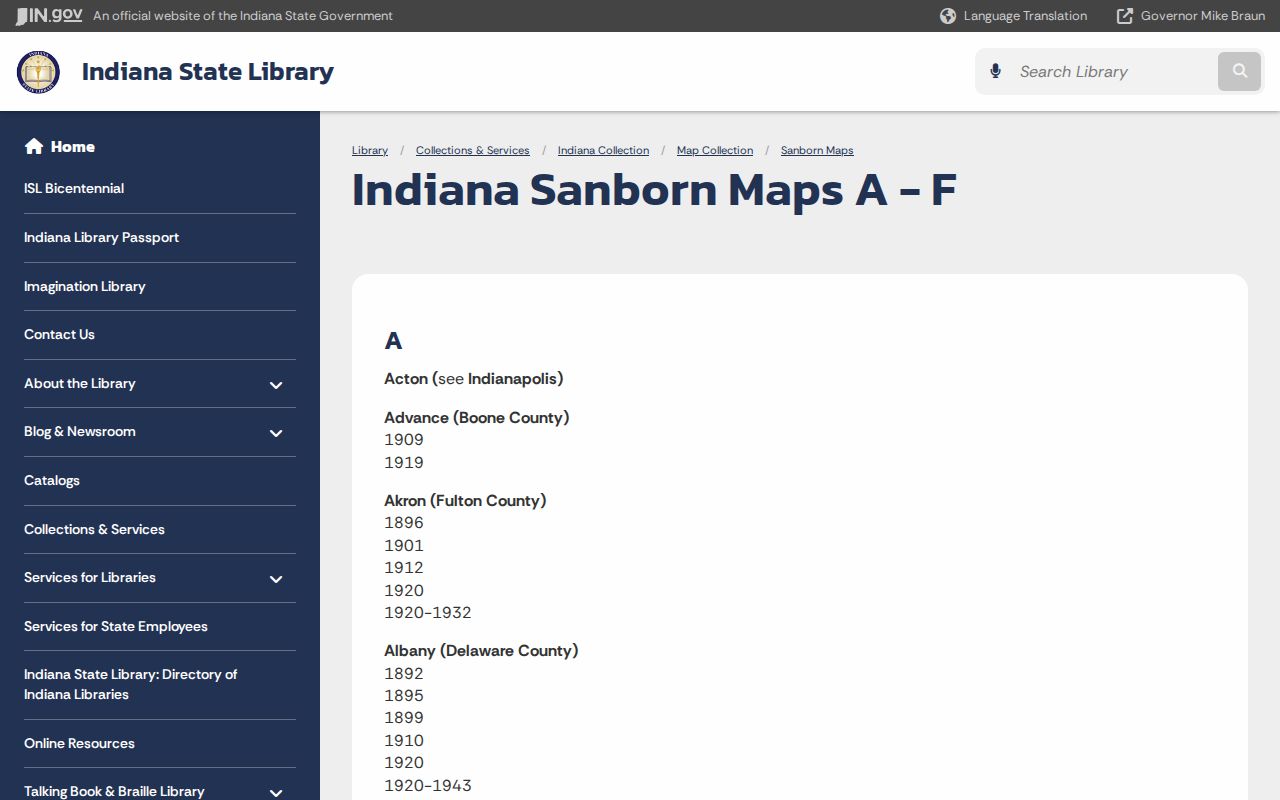
A map can support a date range, but it does not name all previous residents. Pair the map with a directory entry and a deed or transfer record.
Rebuild Evansville Past Households
Owners are only half the story. Evansville city directories may name an adult resident, spouse, work, address, and business connection. Census schedules can show a fuller household when the correct address and enumeration area are found. An enumeration district is the area assigned to a census worker. It is not the same as a modern ZIP code or ward.
- Choose a directory year near the census year and record every name printed at the Evansville address.
- Use the 1929 old-to-new number bridge when the address changed.
- Find the same household in the census and compare ages, relationships, birthplace, and occupation.
- Check the next available directory to see who stayed, moved, or replaced the household.
EVPL's digitized collection begins with an 1858 volume and supports full-text searching, while its Indiana Room offers local-history help and appointment requests. Willard Library's Streets and Buildings files add address-level notes from the mid-1800s through the late 1990s. In-person, phone, and library help are vital when optical text search misses old type or spelling.
Close Evansville Resident Trails
Obituaries, cemetery records, marriage records, and probate files can explain why previous residents vanished from an address. Browning Genealogy provides an obituary index from 1940 forward. A name and death date can then lead to an estate record or MyCase file, and a later deed may show how the parcel left the estate.
The State Library microfilm inventory lists estate indexes from 1821 onward and order books through 1918. EVPL, Willard Library, the Vanderburgh County Historical Society, the Recorder, and the Clerk form the fallback chain when no web search resolves the question. A focused request under the Indiana Access to Public Records Act can seek a known record, but exemptions, copy charges, and retention limits still apply.
Ask the custodian for one record series and a useful date span. Include the names, parcel number, document number, or case number already found. That narrow request gives staff a better chance to locate a deed image, permit file, probate entry, or older index. If the office confirms that a record was never kept or no longer exists, preserve that answer in the log instead of replacing it with a guess.
Lawful use. Research previous residents for family history, house history, estates, or personal curiosity. Never use a living person's address to watch, harass, intimidate, or harm them.