
Evansville City Directory Holdings
Evansville city directories survive through a mix of digital images, library shelves, microfilm, and partner repositories. The run begins with a W.H. Chandler volume. Later editions include work by H. Thornton Bennett, Brandis & Meadows, and Bennett & Co. The documented online span is not the same as every volume held on paper, so remote and in-person access should be checked separately.
| Collection | Years | Where Held | Access |
|---|---|---|---|
| Evansville City Directories | 1858 onward; online run reported 1858-1910 | EVPL, Willard, USI Rice Library | Free digital images; library holdings |
| State Library volumes | 1889 and 1892 documented | Indiana State Library | County guide and call-number research |
| 1894 Bennett & Co. volume | 1894, 620 pages | EVPL and Indiana digital mirror | Free public-domain page images |
| Street-address sections | 1874 addresses; detailed 1897; crossings 1903 | EVPL, Willard, partner repositories | Digital and in-person, year dependent |
| Telephone books | Local runs, exact years unconfirmed | EVPL Indiana Room | Ask staff before visiting |
No complete local publisher list, phone-book run, reverse-directory title list, or final printed year was established in the research. Ask the holding library about the exact year before treating a gap as evidence that someone left Evansville.
Search Evansville Directories Online
The EVPL digitized directory collection offers full-text searching and page images. Search a surname first, then test initials, variant spellings, a spouse's name, an occupation, and the street number. Optical text can miss small type or a damaged page, so browse nearby alphabetical pages after every no-match.
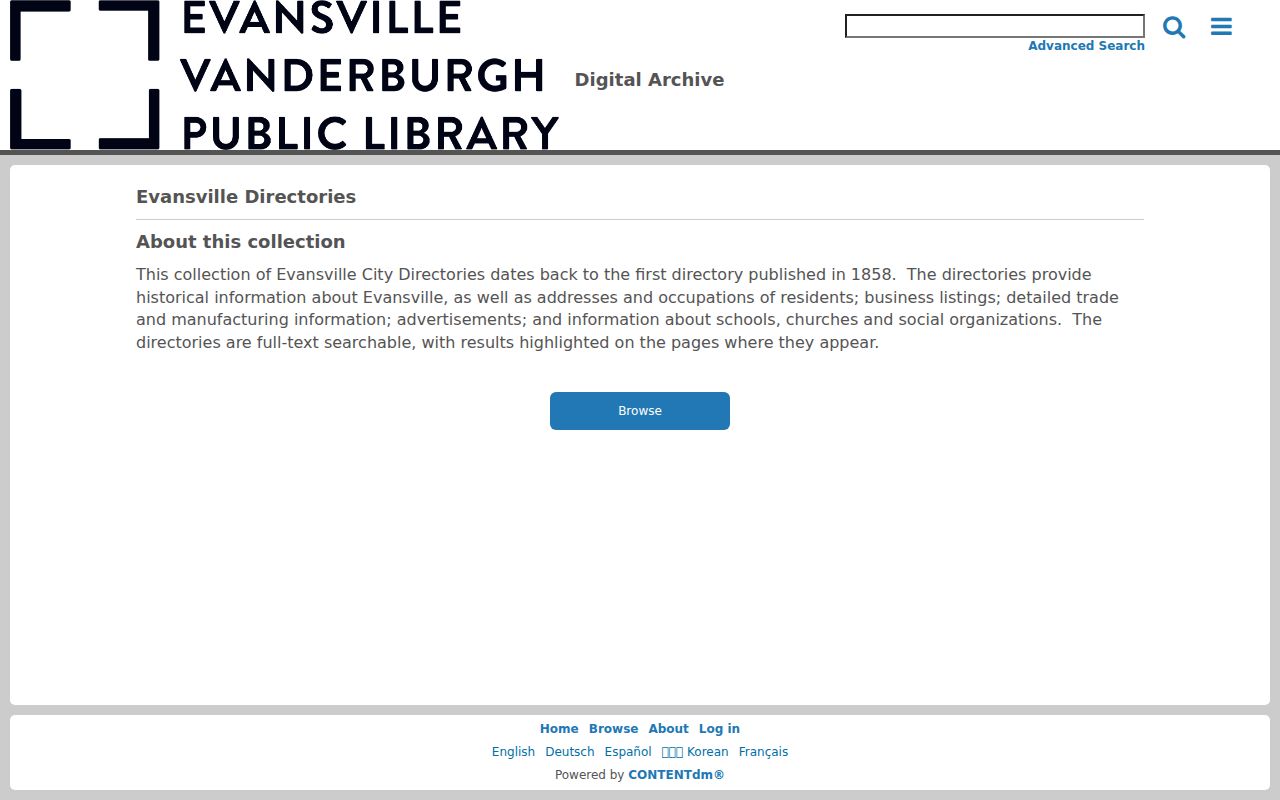
The image view preserves advertisements, civic lists, churches, schools, and business sections that a text hit alone can hide. Save the volume year and page with each finding.
One useful sample is the 620-page 1894 city, residence, business, and Vanderburgh County directory. Its metadata names Bennett & Co. and manager H. Thornton Bennett Sr., but the exact abbreviation key must still be read in the chosen volume.
Evansville Directory Years Changed
The shape of an Evansville city directory changed over time. A name search that works in one decade may fail in another because street addresses and street-order sections had not yet appeared.
| Year | Directory milestone |
|---|---|
| 1858 | First documented Evansville directory; no addresses or descriptions |
| 1873 | City numbering adopted |
| 1874 | First street addresses appear |
| 1897 | Detailed street directories appear |
| 1903 | Intersecting streets and railroad crossings appear |
| 1929 | Old and new street numbers are bridged |
The Historic Evansville chronology lays out these shifts.
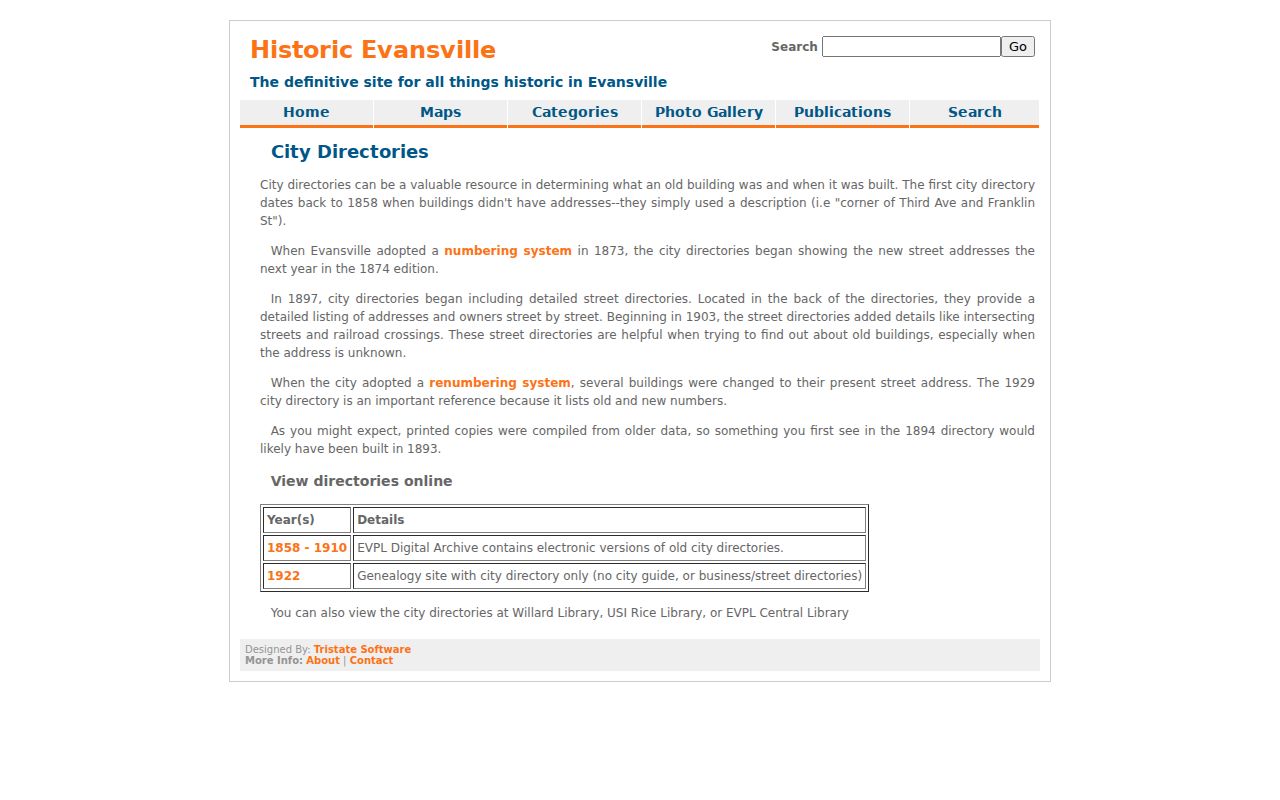
The 1929 cross-reference is especially valuable. It can reconnect a household to the same lot after an address number changed.
Decode an Evansville Directory Entry
A printed entry may combine a surname and given name with a residence address, business address, occupation or trade, spouse notation, widow or deceased mark, and a business reference. The exact fields and abbreviations vary by volume. Owner or renter marks must not be assumed unless that year's key confirms them.
| Resident name | Surname, given name, initials, and spelling variants |
|---|---|
| Residence | House number and street when that volume carries addresses |
| Work detail | Occupation, trade, business address, or printed business reference |
| Family notation | Spouse in parentheses or widow/deceased wording where used |
| Civic material | Schools, churches, societies, post offices, institutions, and ads |
Photograph or save the title page, publication year, abbreviation key, entry page, and street section. Those pages make the transcription auditable.
- Criss-cross directory
- A directory arranged by address rather than only by resident name. Evansville research confirms street sections, not a complete separate criss-cross title run.
- Householder index
- An address-oriented list of the person printed as the principal occupant.
- Abbreviation key
- The volume's own legend for shortened words and marks. It controls how an entry should be read.
Evansville Directory Help at EVPL
Digital search is only one access channel. The EVPL Central Indiana Room holds local-history material and accepts research appointments. Staff can help identify a directory year, telephone-book run, newspaper path, obituary index, map, or nearby source when a web search fails.
The EVPL Indiana Room appointment page asks for a name, contact details, proposed date and time, research topic and purpose, and requested materials.
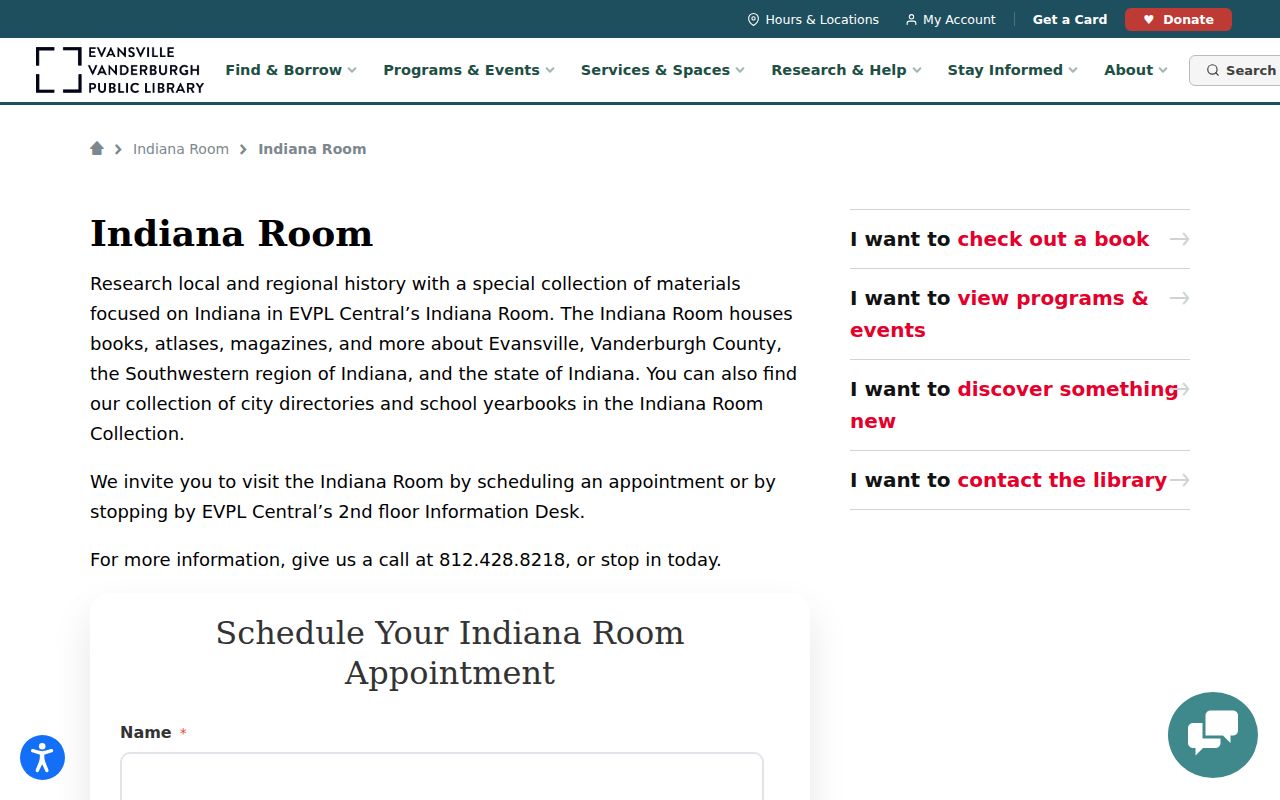
Call the Indiana Room at 812-428-8218 or EVPL reference at 812-428-8200 extension 1418. Naming the person, street, and year range helps staff pull the right Evansville city directory before a visit.
Willard Links Evansville Streets
Willard Library's Evansville Streets and Buildings files contain annotated address and building entries spanning the mid-1800s through the late 1990s. Free PDFs can link a street name, structure, date, or local note that does not appear cleanly in an alphabetical directory search.
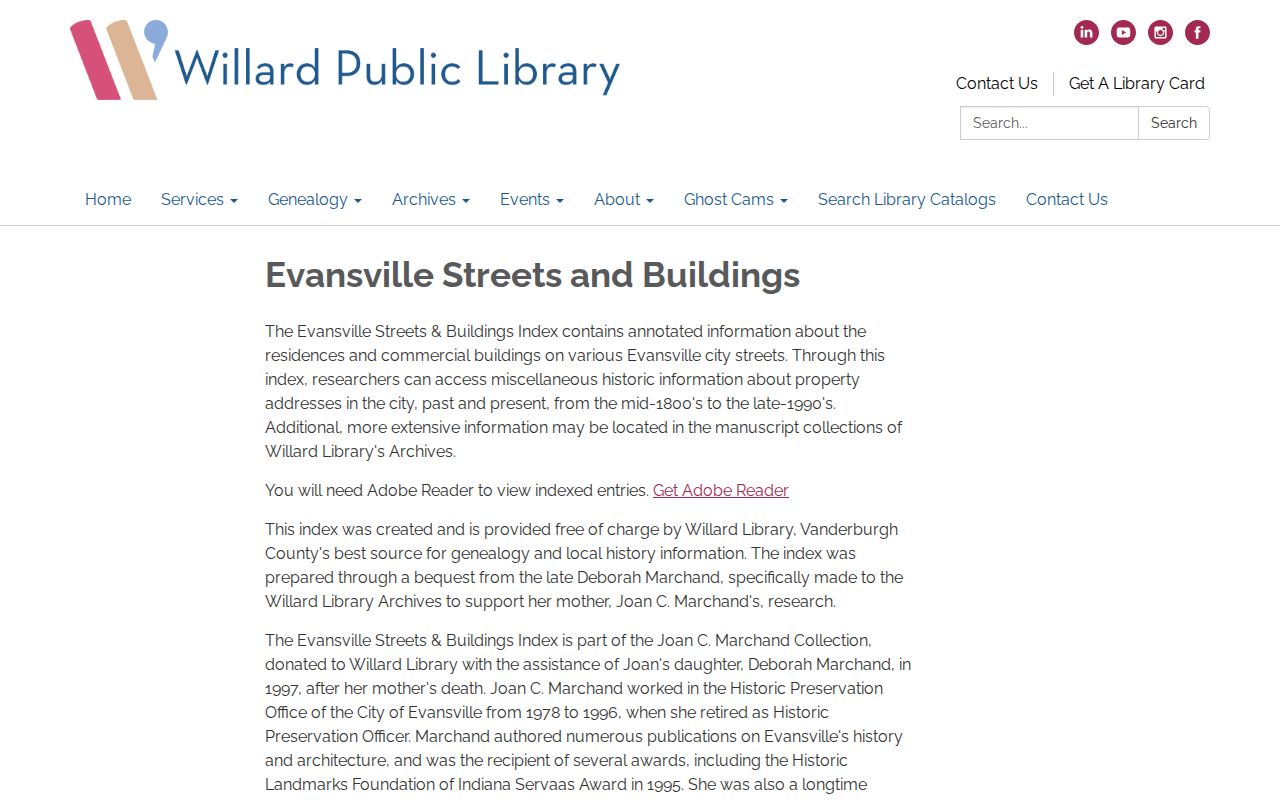
More material may remain in the archives. Willard's second-floor genealogy resources also include local newspapers, church and marriage indexes, and Sanborn maps. Indiana residents can obtain a free library card for applicable resources.
Contact genealogy staff at 812-425-4309 or genealogy@willard.lib.in.us when an online file points to uncopied material.
Evansville Records Beyond City Directories
The Indiana State Library Vanderburgh guide extends a directory find into microfilm and county collections.
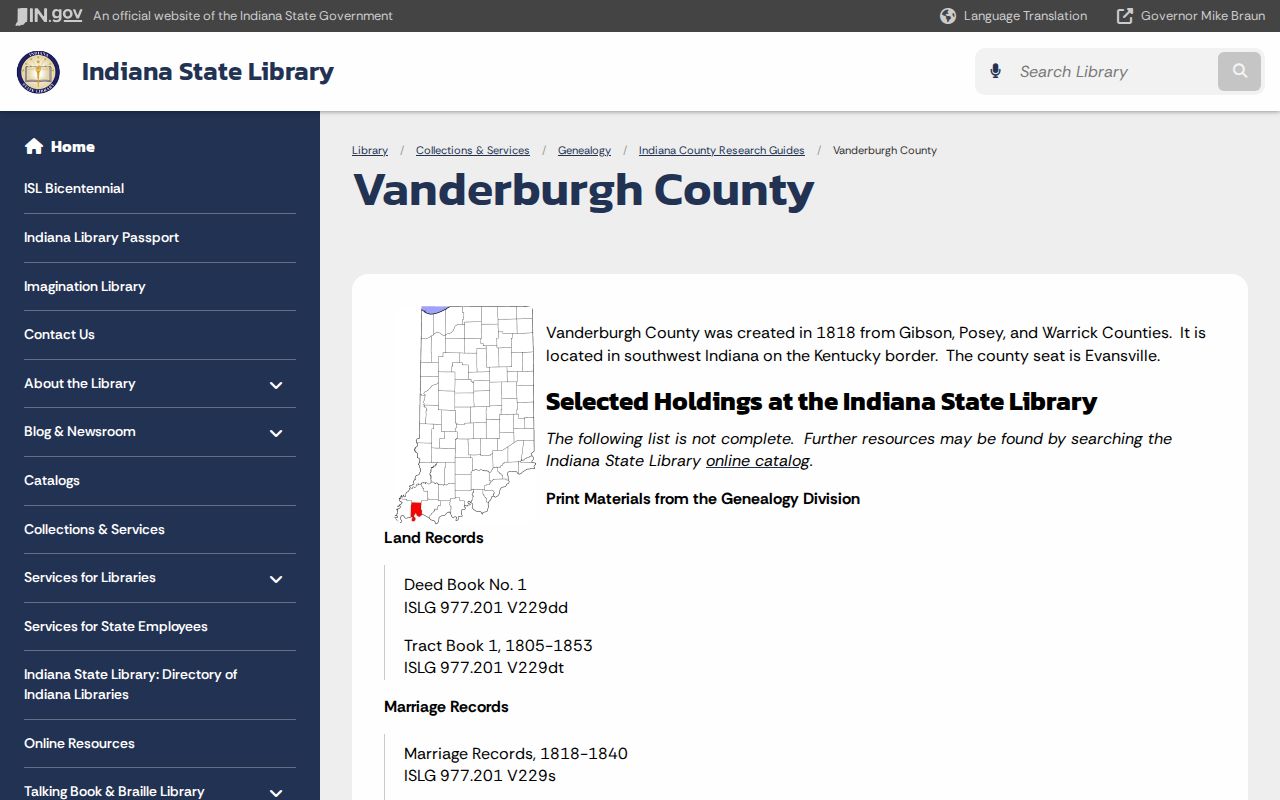
Documented microfilm includes grantor and grantee indexes from 1818 through 1901, order books from 1821 through 1918, estate indexes from 1821 onward, and marriage indexes from 1818 onward. WPA birth, death, and marriage indexes cover key portions of 1882 through 1920, with marriage indexing reaching earlier years.
Those sources help separate same-name people. A deed can test ownership, a marriage index can identify a spouse, and an estate or order-book entry can explain why a person disappears between city directory years.
Test Evansville Directory Claims
A city directory is a dated publication, not a deed or current census. Compare its address with Sanborn fire-insurance maps, property-owner atlases, newspapers, and Willard's building files. Evansville Sanborn holdings include editions and updates from 1884 into the 1960s, while state map holdings include property-owner and city maps from 1890, 1892, 1906, 1930, and 1934.
The 1937 flood and the city's wartime production are useful time markers. They can explain changes in street use, industrial terms, advertisements, and newspaper coverage, but they should not be called a records-loss event without proof from a custodian.
The Vanderburgh County Historical Society adds articles, tours, and local context.
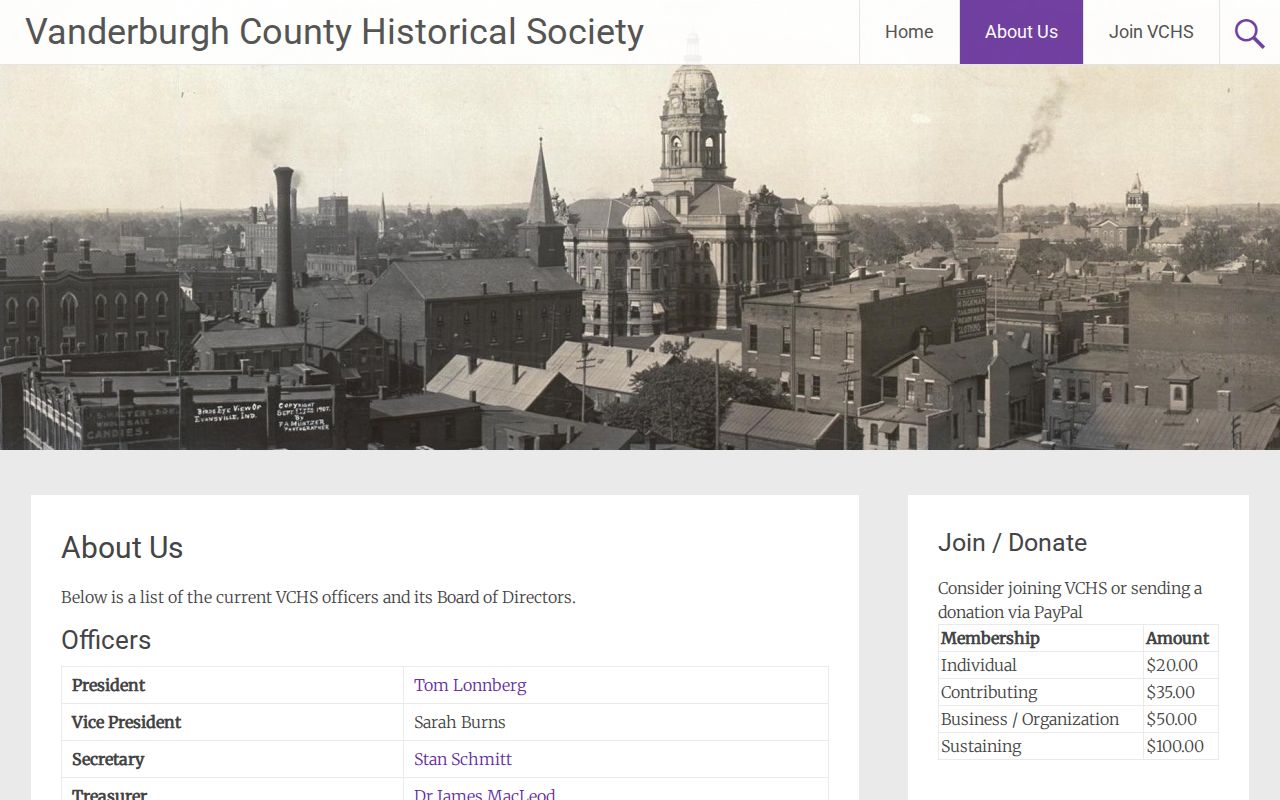
Society context can guide the search, while the dated directory page, map, newspaper, or county record supplies the evidence.
Trace Family Through Evansville Directories
Follow a household one volume at a time. A directory can fill years between federal census schedules, while census records provide a dated household snapshot under the 72-year release rule. Neither source should stand alone.
- Find the earliest likely name entry. Record spelling, initials, occupation, spouse notation, address, volume year, and page.
- Move forward through nearby directory years. Note every move, absence, business change, and widow notation without guessing why it occurred.
- For later volumes, search the street section by number. Use the alphabetical entry to add personal or business detail.
- Pair the directory with the nearest public census. Account for ward and boundary changes before deciding two entries match.
- Test the identity with obituaries, newspapers, marriage indexes, cemetery records, deeds, probate or order books, and church records.
EVPL's Browning obituary index begins around 1940, and the Courier & Press archive reaches back to 1871. A dated obituary can name relatives and point toward probate or cemetery material. When a historical address must be carried into modern parcel records, use the Evansville street directory workflow.
Note: Absence from one volume may mean a move, death, unlisted entry, spelling change, or publication gap, so test at least one other source.