
Start an Evansville Residents Directory Search
An Evansville search works best when the first record matches the clue in hand. Use Vanderburgh County XSoft for an address, owner name, or parcel number. Use Indiana MyCase for a party tied to a public court file. Indiana Voters can test a current registration with exact name, birth date, and county entries. For an older address, move to the Evansville Vanderburgh Public Library digital directories and the Willard Library streets and buildings files.
No source is a complete household roll. An assessor record identifies an owner and parcel, not every occupant. A voter result covers a registered voter, subject to privacy rules, but not a whole home. A directory reflects its publication date. Treat each hit as one dated clue and confirm identity through geography, time, and another official index.
- Search the Vanderburgh Assessor roll by owner, address, or property number and save the parcel ID and legal description.
- Check Indiana Voters with the name as registered, the date of birth, and Vanderburgh County selected.
- Follow ownership through the Recorder's public computer, Tapestry, or Laredo index, using party and parcel clues.
- For an earlier household, search EVPL city directories and compare the address across nearby publication years.
- When an index stops, ask the custodian for the specific record under the Indiana Access to Public Records Act.
Offices Behind the Evansville Residents Directory
Most Evansville resident evidence is held by Vanderburgh County at the Civic Center Complex. The Assessor connects owners to parcels and situs addresses. The Recorder preserves deeds, mortgages, plats, liens, and other instruments. Election staff administer registration records and can explain a public status mismatch or the restricted process for fuller voter-file access. The Clerk handles court copies and marriage records. A street-wide method belongs in the Evansville street directory; these contacts identify the right keeper.
Vanderburgh County Recorder
Room 231, 1 NW Martin Luther King Jr Blvd
Evansville, IN 47708
(812) 435-5215
Vanderburgh County Assessor
1 NW Martin Luther King Jr Blvd
Evansville, IN 47708
(812) 435-5267
Vanderburgh County Election Office
Room 216, 1 NW Martin Luther King Jr Blvd
Evansville, IN 47708
(812) 435-5122
Search Evansville Parcels Three Ways in XSoft
The Vanderburgh Assessor's XSoft portal is the strongest address-first entry in the Evansville residents directory. Select real or personal property, type at least three characters, and search by owner, address, or property number. Suggestions may show a state number, owner, address, and assessed value. The result can be opened on a data page or a map, while Advanced Search can narrow by sale, building, neighborhood, district, year-built, size, or land traits.
| XSoft control | Useful input | What to retain |
|---|---|---|
| Owner | At least three characters of a name | Owner spelling and linked parcel |
| Address | Street number or street text | Situs address and parcel number |
| Property Number | Known parcel or state number | Legal description and detail record |
| Advanced Search | Sale, value, class, district, year, area, acreage | A narrowed set, not proof of occupancy |
The detail view may add transfer history, sales, valuation, land, improvements, sketches, photos, utilities, topography, and street features. It is assessment data, supplied as-is, so a deed or office copy remains the better source for a legal ownership conclusion.
The Vanderburgh property-search screen shows the owner, address, and property-number entry points before the result set opens.
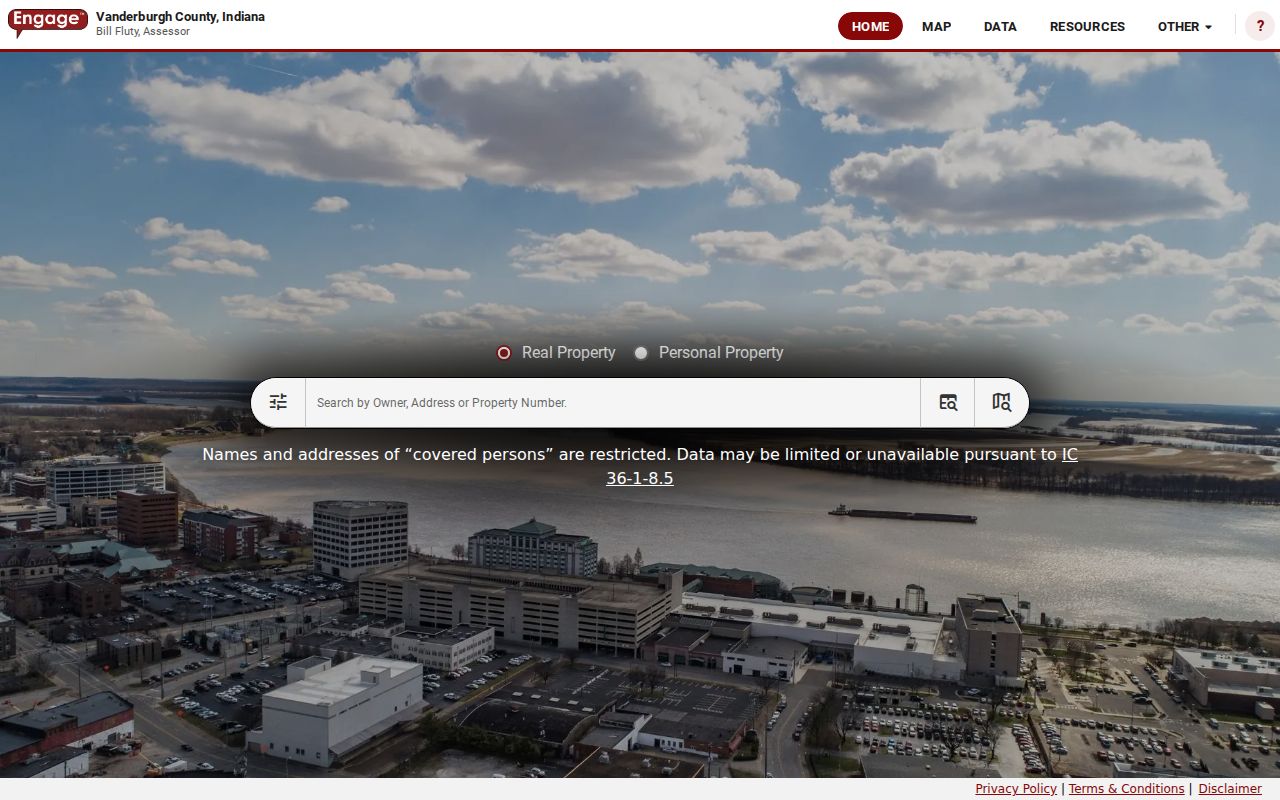
That field choice is why a partial street clue and a name clue should be tested separately instead of merged into one query.
Evansville Deeds Continue Beyond the Web Index
The Recorder's index turns an assessor match into a chain of recorded instruments. Tapestry exposes party name, document number and type, recorded-date range, consideration, subdivision, lot, block, parcel number, and map-and-bounds or legal-description fields. Laredo serves regular subscription users. Neither route replaces the free public computers in Recorder Room 231, where staff can orient a visitor but cannot conduct a title search or give legal advice.
Older research has a second fallback. Indiana State Library microfilm includes Vanderburgh grantor and grantee indexes from 1818 through 1901, order books reaching from the county's early decades into 1918, and estate and marriage series. A focused APRA request, mail or fax contact, and an in-person inspection cover records that are not exposed by the remote tools.
The county's Recorder access guide distinguishes the office computers, occasional Tapestry use, and Laredo subscription.
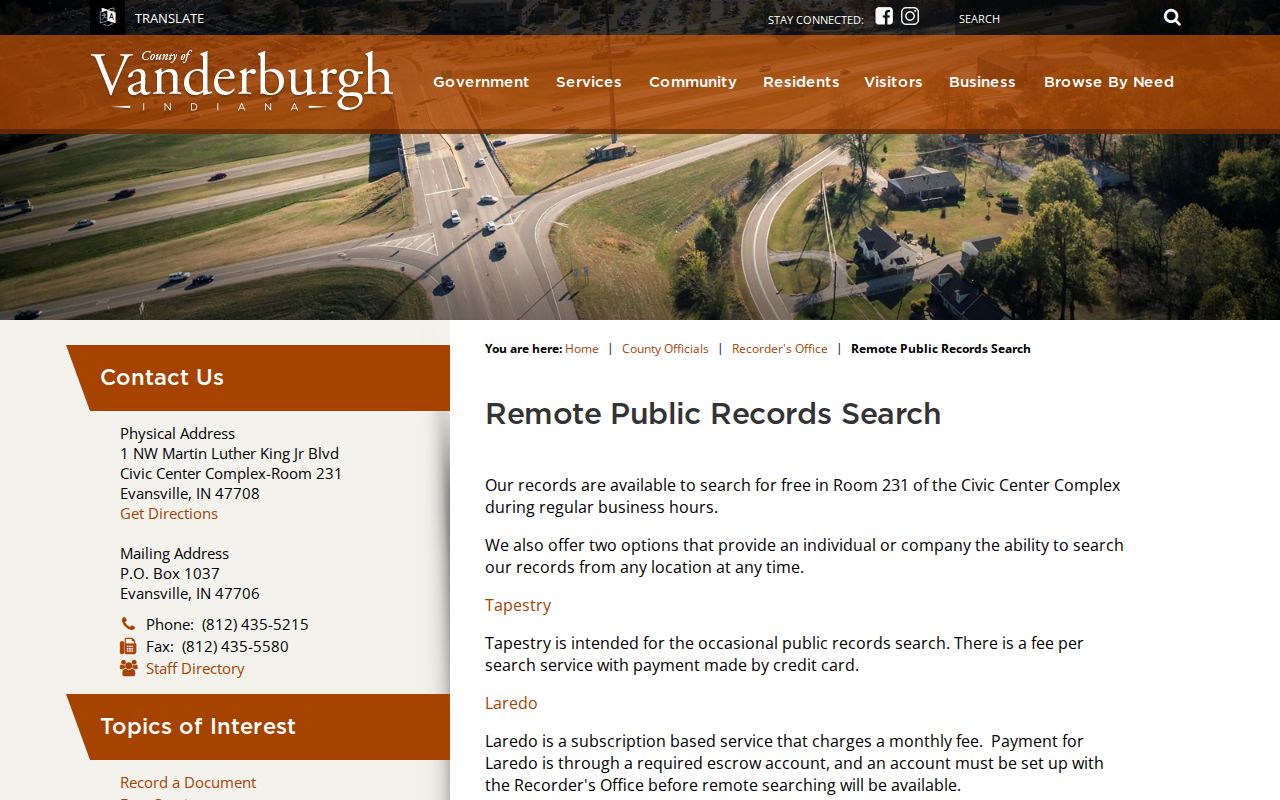
The three channels matter because an absent web result can reflect access or coverage, not the absence of a recorded instrument.
Current Rolls in the Evansville Residents Directory
Modern Evansville sources answer different questions and list different classes of people. The safe method is to name the record, its keeper, and the date or status it proves. Commercial search compilations can blend old and copied data; an official roll is narrower, but its purpose, custodian, fields, and correction route are clear.
| Source | Who It Lists | Keeper | Access |
|---|---|---|---|
| XSoft property roll | Parcel owners | Vanderburgh Assessor | Free portal, office fallback |
| Indiana Voters status | Matching registered voters | State and county election offices | Exact-entry public lookup |
| Recorded-instrument index | Parties to deeds, mortgages, liens, and plats | Vanderburgh Recorder | Office computer, Tapestry, Laredo |
| Indiana MyCase | Parties in public court cases | Indiana Judicial Branch | Free search, Clerk copies |
| Neighborhood sources | Association areas and public contacts, not member households | City GIS, UNOE, police | Free maps and public directories |
A parcel roll supports an ownership claim; the voter screen supports registration status; a deed index supports participation in a recorded transaction; and MyCase supports a public case match. When the goal is one named person rather than a parcel, the Evansville resident lookup explains how to separate same-name records.
Indiana Voters Is Not an Evansville Street Roster
Indiana Voters asks for first name, last name, date of birth in month-day-year form, and the county of current registration. Vanderburgh must be selected. The portal warns that initials and suffixes can cause a miss and advises using the name as registered. If an exact entry fails, county voter staff are the right correction contact.
The public status screen is not a downloadable block directory. Computerized voter-file requests go through county policy and the VRG-24 agreement. Statewide reports omit sensitive fields, Address Confidentiality Program information stays confidential, and Social Security numbers are not disclosed. Historical voter-registration material may instead be found through the State Library, state archives, or indexed historical collections.
Use public records for lawful personal research and civic understanding. Do not use a resident roll to stalk, harass, expose, or harm anyone.
The Indiana Voters lookup presents the current registration search and county selector.
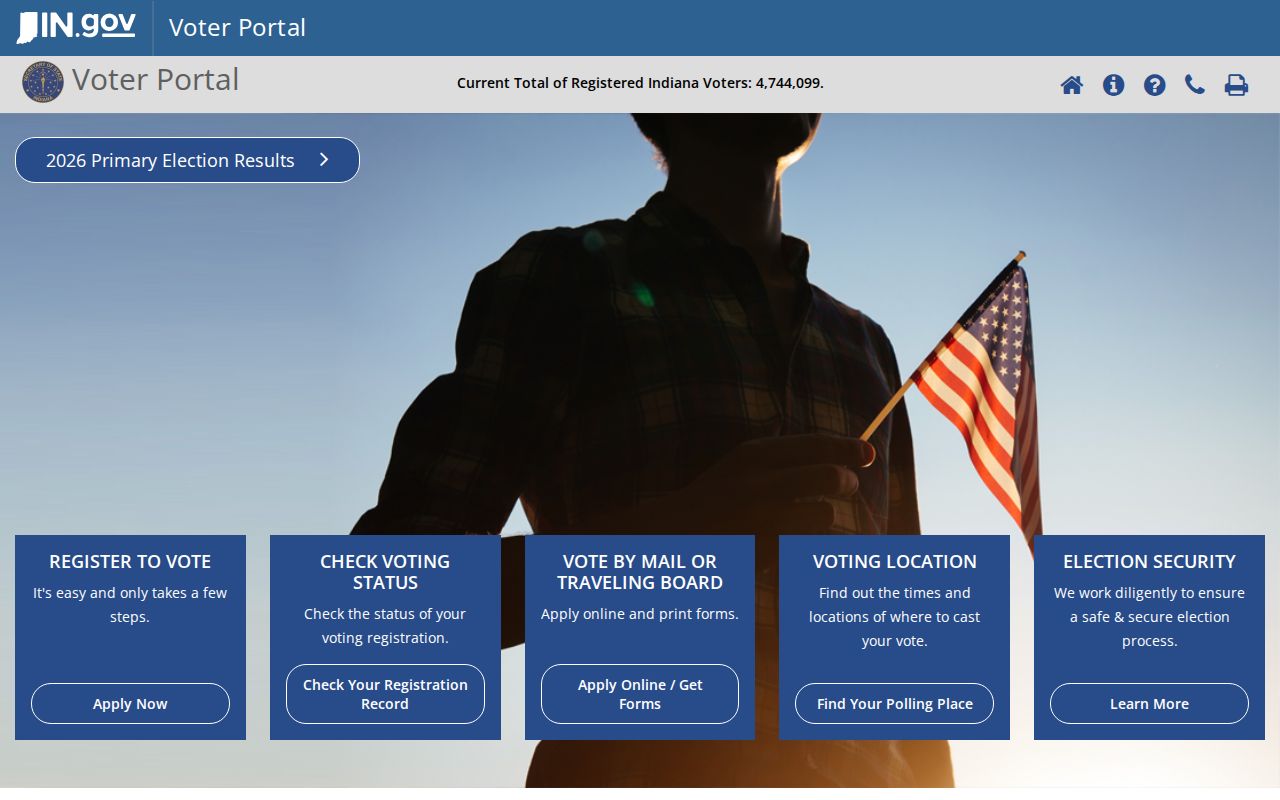
Its exact-entry design supports a known-person check, not a general list of everyone on an Evansville street.
Evansville Court Names Need a Second Anchor
Indiana MyCase searches public cases by case number, citation, cross-reference, party, or attorney. A party search can use last or business name, first and middle name, date of birth, court, status, filing date, and case type. Wildcard rules, a CAPTCHA, and a result cap affect broad queries. Sealed, expunged, juvenile, confidential, or otherwise restricted matters do not become public through the portal.
A name match alone is weak. Compare the county, case type, filing period, party role, and docket events. For copies, an older file, or a result that needs certification, use the Vanderburgh Clerk request form. It separates an entire file from a specific document and asks for the cause number, party, filing date, and delivery choice.
The official Indiana MyCase search offers case, party, and attorney paths for public records.
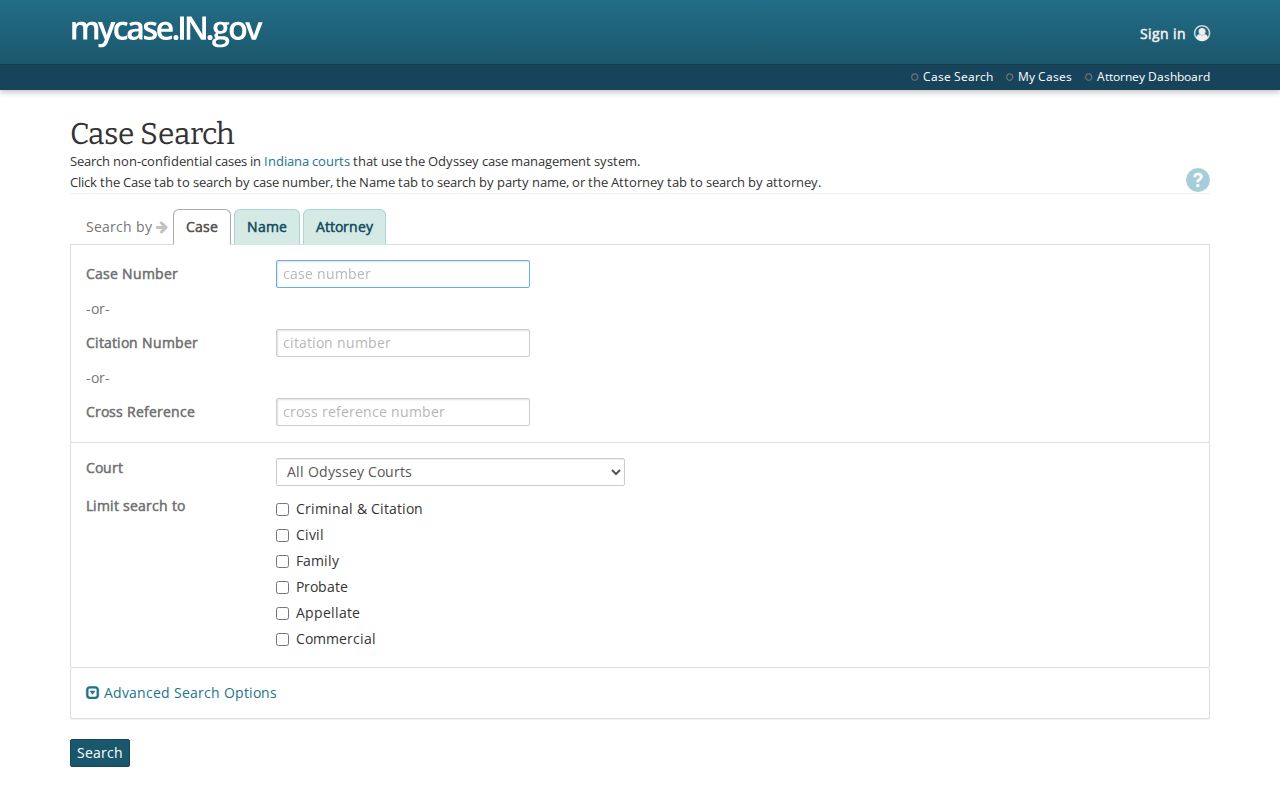
Those separate tabs reinforce the need to record which query and filters produced a possible Evansville match.
Evansville Vital Records Split by Date and Eligibility
Birth, death, and marriage material follows a different path from open indexes. Vanderburgh County Health Department is the practical local contact for birth and death certificates. Indiana Department of Health provides state applications and online ordering through its approved vendor, but eligibility, identification, purpose, and certificate type control what can be issued. The local death service also distinguishes certified, non-certified, and genealogy copies.
Marriage research can begin with Indiana's public lookup for many licenses from 1993 forward. Vanderburgh County marriage records reach back to 1835, and the Clerk supplies regular or certified copies. Earlier family-history work may continue through State Library marriage indexes and returns on microfilm. Adoption information is confidential and uses Indiana's Adoption Matching Registry, with eligibility, consent, identification, and age rules rather than an open name search.
Evansville Permits Add a Dated Address Clue
City permit and inspection records can show when work was proposed or reviewed at an Evansville address. The Building Commission workflow asks for the work address, scope, cost, license-holder contact, plans, and application reference, with payment and inspection steps handled through the city process. The MUNIS self-service portal offers permit and inspection viewing, while complete access may require registration or a direct request.
A permit is not a resident roll, but it can tie an address to a date, project, contractor, or city file. For historical research, compare a Sanborn map's footprint with a likely alteration period, then request the matching permit or inspection record. Phone, email, and a focused public-records request remain the fallback when the portal does not display the needed file.
An Evansville ZIP Is a Postal Clue, Not a Border
USPS can check an address for its standardized ZIP, list ZIPs for a city and state, or identify cities associated with a ZIP. Evansville's official ZIP-area map supplies local context, while XSoft and GIS reveal a parcel's situs, mailing line, taxing district, ward, and mapped geography. Those labels can differ because each serves a separate administrative purpose.
Use a ZIP to narrow a broad lead, then confirm the street and parcel. Do not infer that each address carrying an Evansville postal city lies inside municipal limits. PO boxes, carrier routes, and ZIP+4 assignments are delivery tools, not household directories. Preserve the USPS label, mapped city boundary, and parcel jurisdiction as distinct facts.
Historical Shelves in the Evansville Residents Directory
EVPL's digitized Evansville city directory collection begins with an 1858 volume and supports full-text searching of scanned pages. Entries can preserve a resident or business name, occupation, address, spouse or widow notation, advertisements, institutions, and organizations. The 1894 volume is a substantial local research object, while later street sections and the 1929 old-number/new-number bridge can rescue an address that appears to vanish.
Use the digital shelf first, then ask EVPL's Indiana Room staff about local-history materials and appointments. Willard Library's Evansville Streets and Buildings files add annotated place history. The Indiana State Library county guide, microfilm, Sanborn holdings, Vanderburgh County Historical Society, and USI Rice Library supply further paths when a volume, map, or index is not online. The full collection and entry-reading method belongs in the Evansville city directory.
Record terms: a roll lists a defined class; an index points to a record; a parcel is a mapped tract; a criss-cross directory reverses a name list by address.
The EVPL local-history gateway brings directories, maps, newspapers, and research help into one starting point.
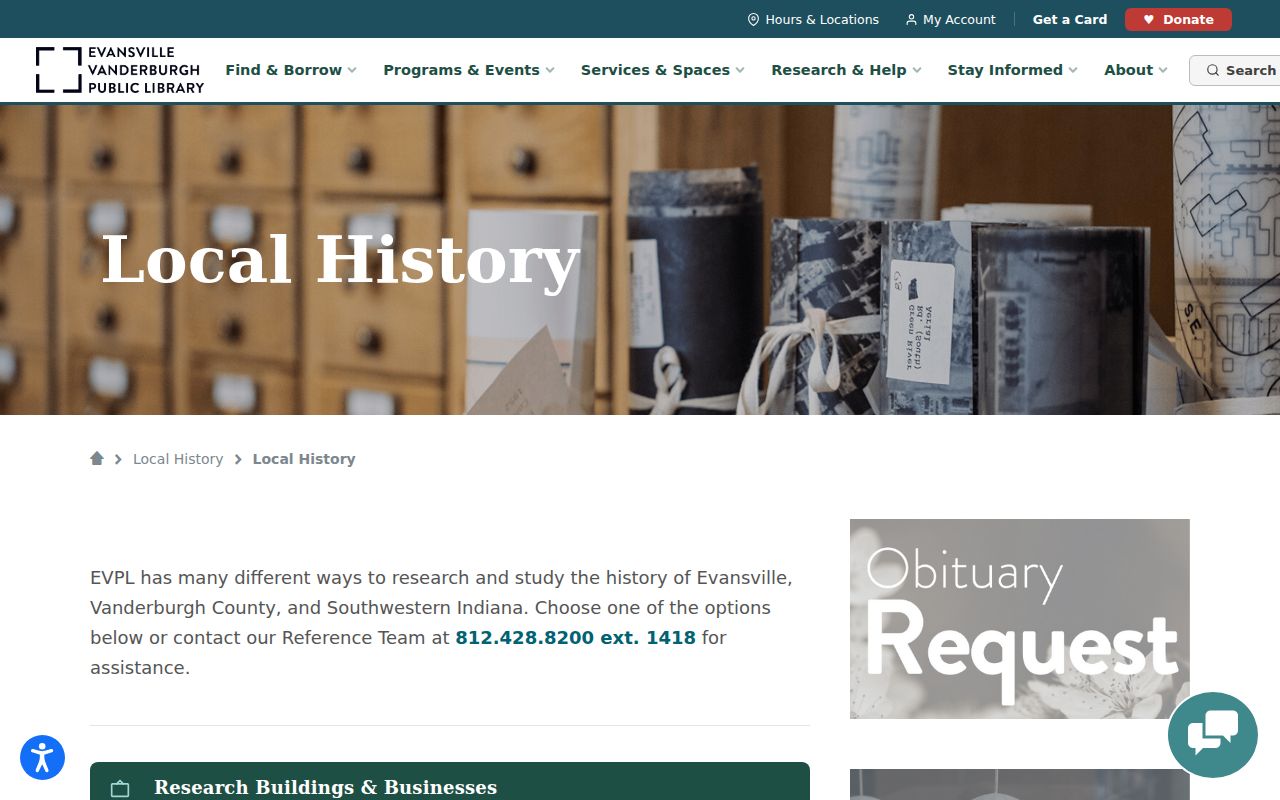
The library route is essential when a scanned search misses variant spelling, an old street number, or a volume that requires staff help.
When an Evansville Portal Stops, Request the Record
Indiana's Access to Public Records Act, IC 5-14-3, provides the framework for requesting public records, subject to mandatory and discretionary exceptions. Vanderburgh County's general form asks for requester details, a focused description, inspection or copy preference, and mail or email delivery. It lists a per-page copy charge plus possible media and postage costs. Office-specific forms are better when they exist, such as the Clerk form for court files.
Describe the record rather than asking an office to research a person. Include the custodian, record type, date range, case or parcel number, party name, and the specific document sought. Recorder questions can go by phone, fax, mail, or counter; Clerk requests can go by mail, fax, or in person; library and archive staff can help identify a historical series. Protected addresses, adoption material, sealed files, juvenile records, and identity-sensitive fields remain restricted despite a request.
Keep the response, fee notice, and cited exception with the research notes. That creates a clear audit trail and prevents a missing online hit from being mistaken for a final answer in the Evansville residents directory.